The Demi Method
more advanced tips & tricks for how to get started with color correcting
Welcome to Demi!
I’ve been using Demi Colour since it launched in November 2020, and in that time I’ve really learned how to harness the magic of this revolutionary product. One of the benefits of having me as your Artist or leader is access to my Demi expertise that I’ve cultivated over the last few years! I’ve developed some helpful information and tips & tricks to help you learn how to use your new makeup. Let’s get started with the fundamentals…
What is The Demi Method?
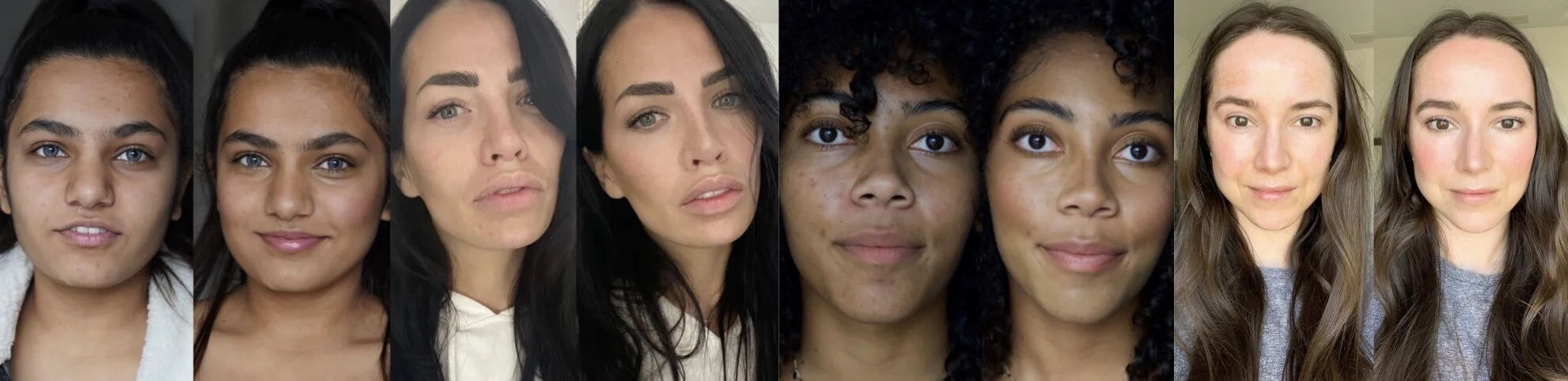
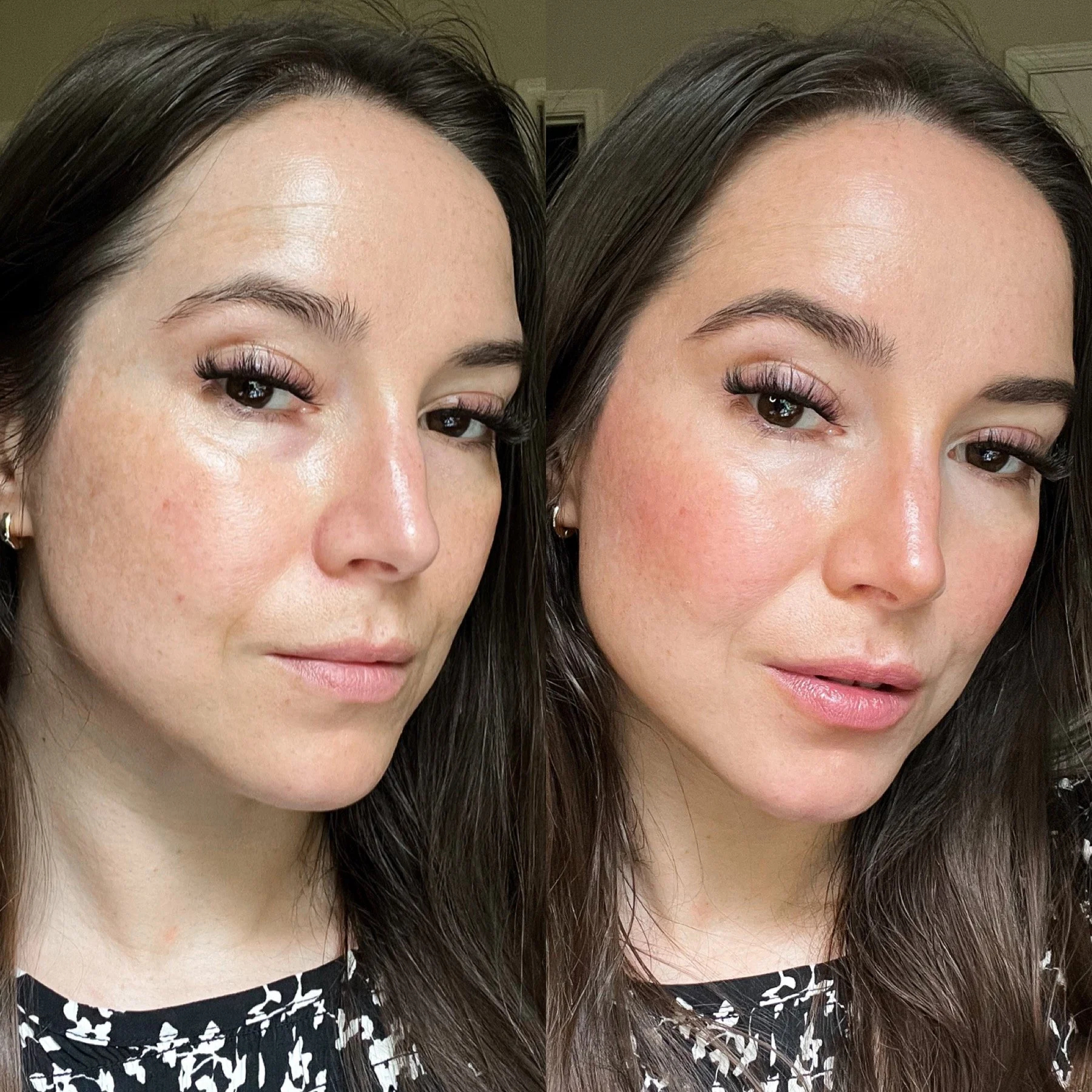
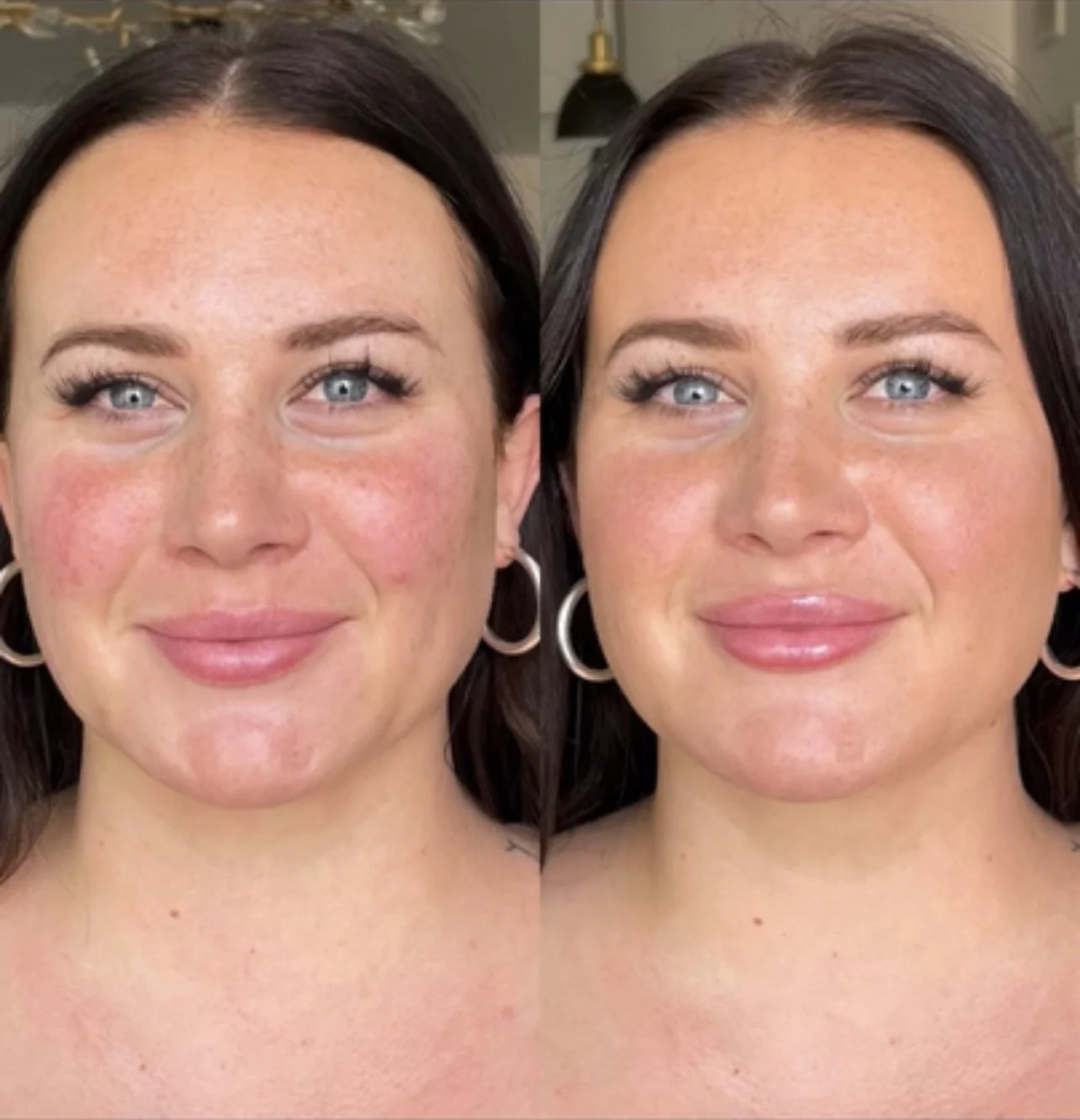
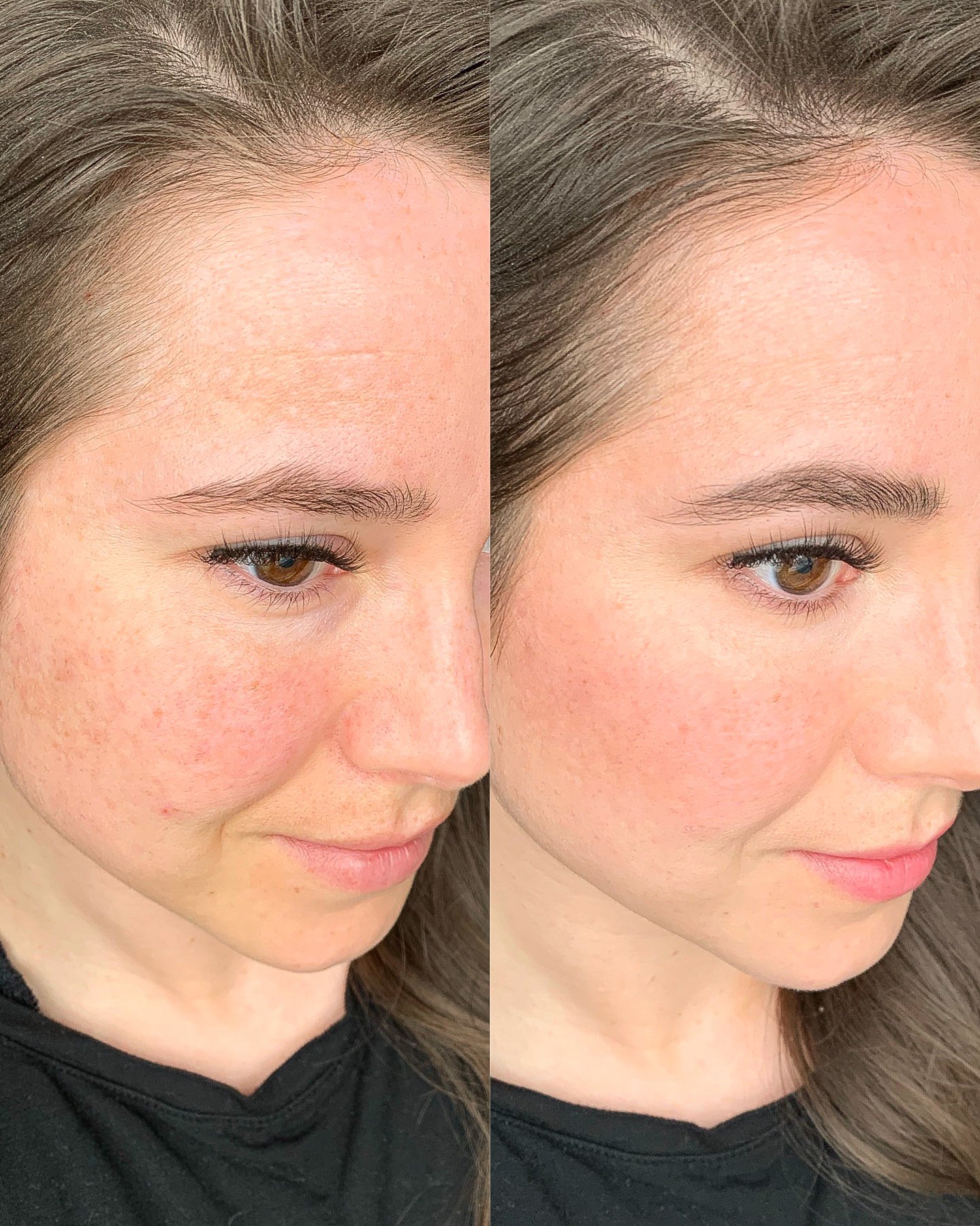
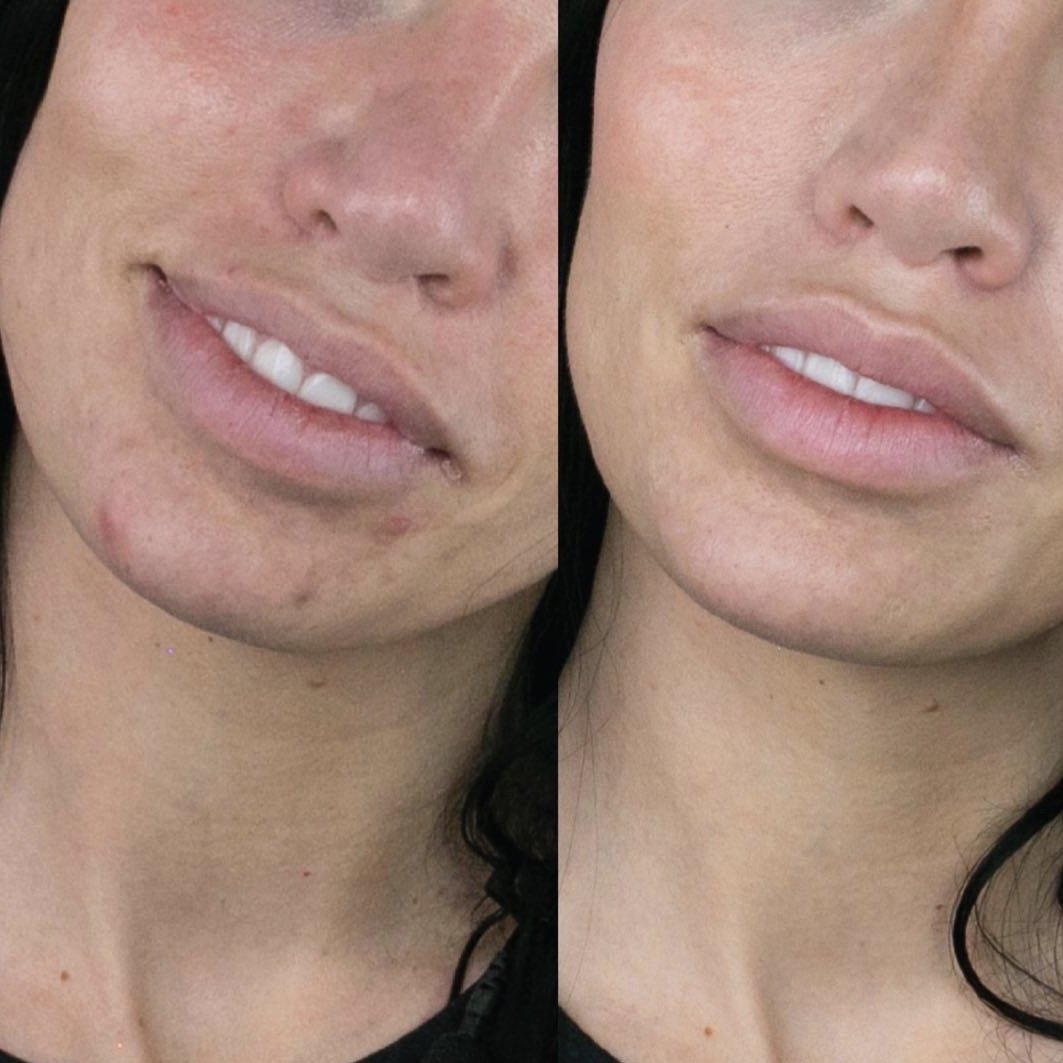
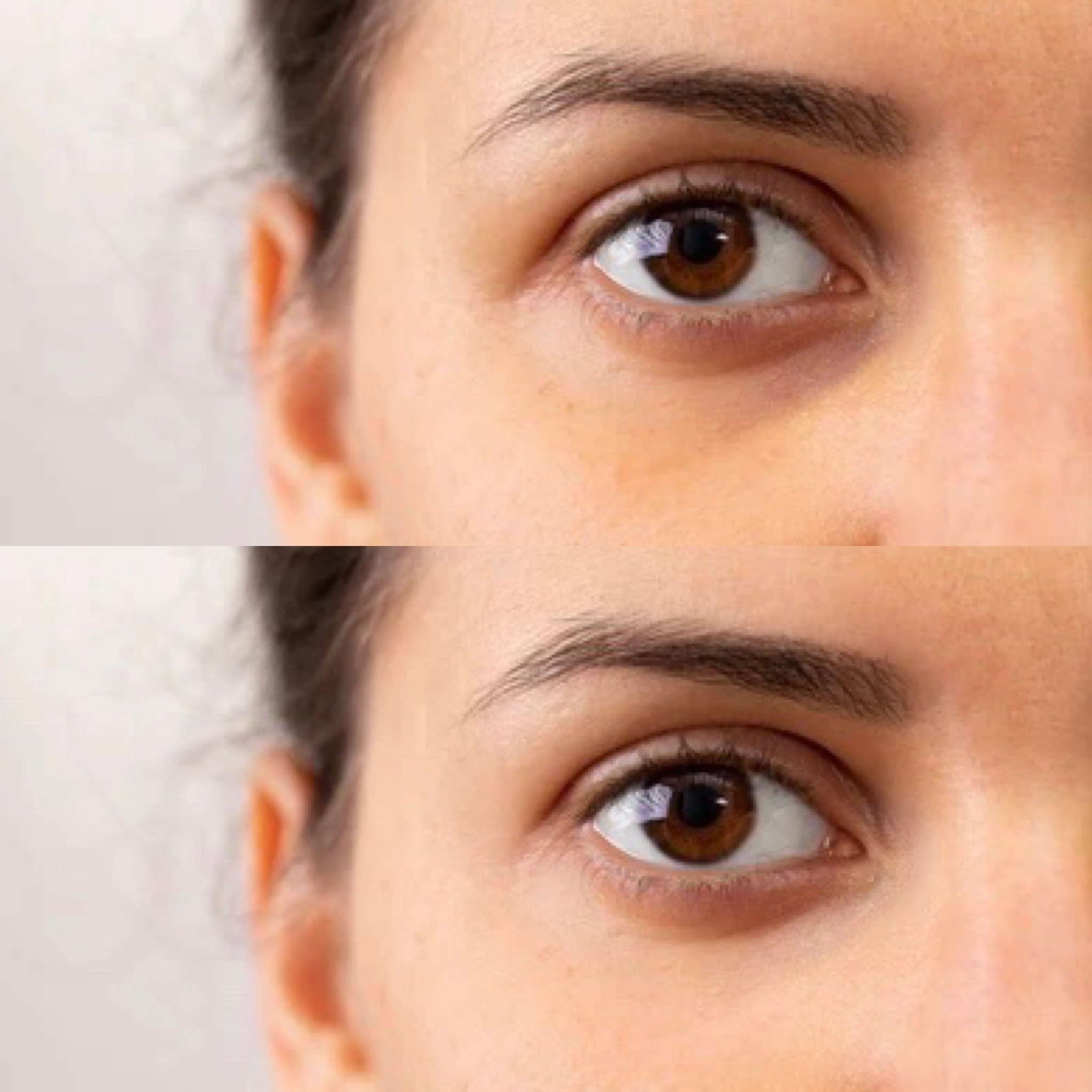
The Demi Method is a minimal approach to makeup that utilizes color theory to enhance skin tone and invisibly filters distractions in the skin for an undetectable makeup look. Bringing things like blemishes, dark undereyes, rosacea, redness, and dark spots back into balance with the rest of the face.
Demi doesn't “cover” imperfections in the skin - it changes the color we see.
This is not foundation or concealer, or “traditional” color correcting. This is a sheer filter. Rather than attempting to find one or two pigments that match the entire face, Demi Colour utilizes complimentary colors, applied only where needed. The color science of Demi doesn’t add any visible makeup at all. None. Doesn’t crease, doesn’t add texture, always blends with your skin tone all year long, lasts all day without the need for setting sprays or powders, never looks muddy or cakey, and is catered to your face and your needs exactly. Letting your unique beauty shine through in a way no makeup product ever has. When I’m wearing Demi Colour I really feel like my true self. It feels like I’m not wearing makeup at all!
Demi Colour can be difficult to explain because it’s so different than anything that’s existed before. But at the same time, it’s so simple! Why cover your whole face with foundation to hide the few small distractions that bother you? When I’m wearing Demi Colour I really feel like my true self. It feels like I’m not wearing makeup at all!
The Color Science of Demi
Seint’s founder and CEO, Cara Brook, once explained the principle behind Demi Colour using colored water, and it completely blew my mind. This really brings me back to elementary school art class by really simplifying color science to the fundamentals.
To break it down, this is the color science behind Demi Colour:
Traditional makeup has us using the color that we want the final product on our skin to be. So, if we want a certain color of blush or eyeshadow, we use that color. If we want to cover a blemish, we use a skin-toned makeup product to cover it so it matches the skin around it. If we cover a blemish with a skin-toned makeup product, we will need more makeup to hide it, which leaves behind excess makeup texture.
The principle behind Demi Colour says that we need to consider the color present in our skin to choose the color of makeup we should use.
Demi Colour uses color science to address the excess color present in the skin directly, so much less product is needed. Leaving behind an invisible color filter that brings the excess color back into balance with the surrounding skin.
So, instead of just slapping one shade of concealer over a red zit, instead try using complimentary shades of orange or yellow Demi Colour to make the excess color in the zit vanish altogether.
Does this make sense?? It can feel a little bit overwhelming to try to think of makeup in such a different way. But once you do, it just makes so much sense!
Using Color Theory
The Demi Method brings us back to learning the fundamentals of Color Theory in elementary school. Remember the color wheel?? If not, you’re about to have a crash course.
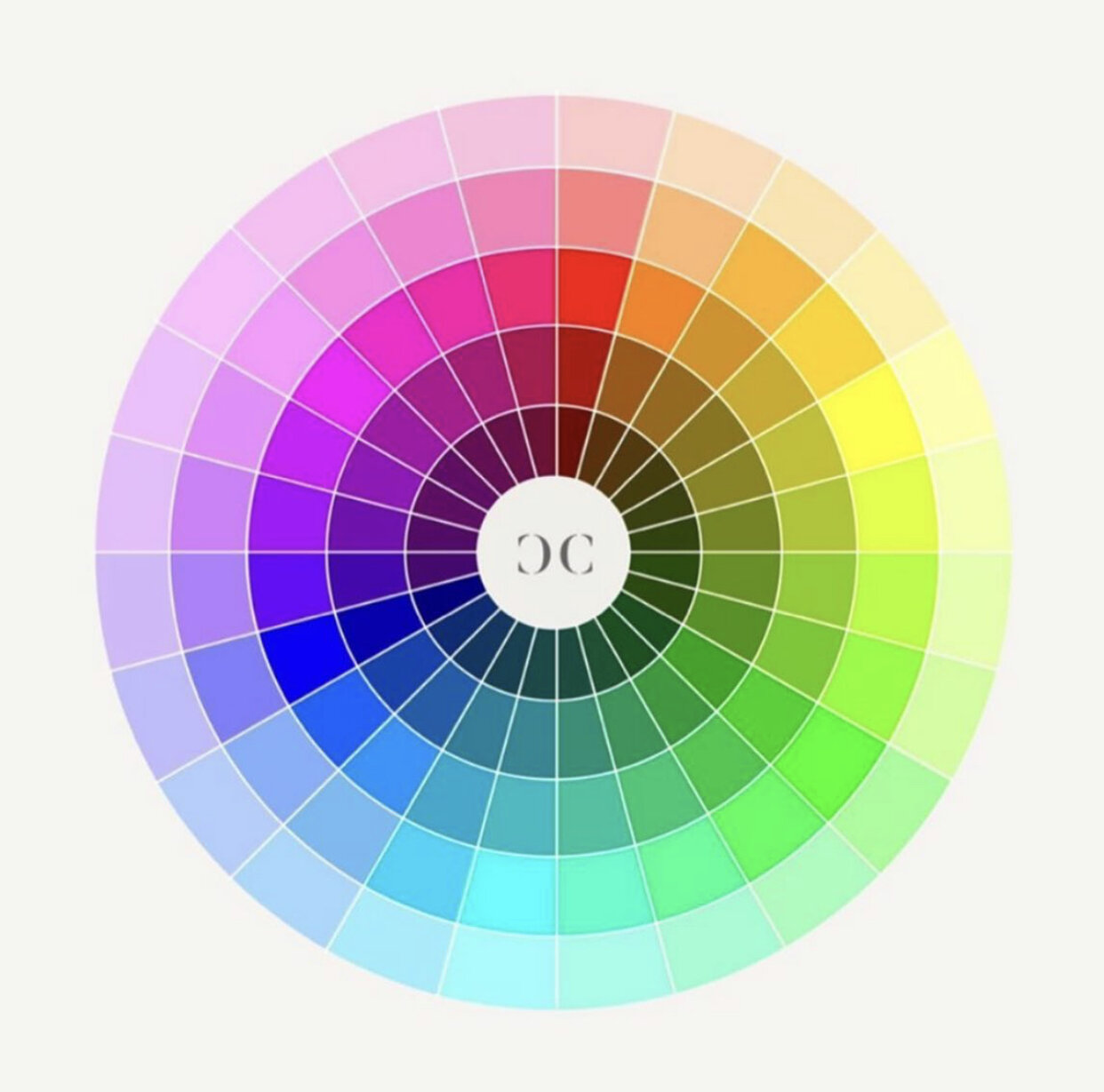
The color wheel is an abstract illustrative organization of the color spectrum around a circle, which shows the relationships between primary colors, secondary colors, and complimentary colors, etc.
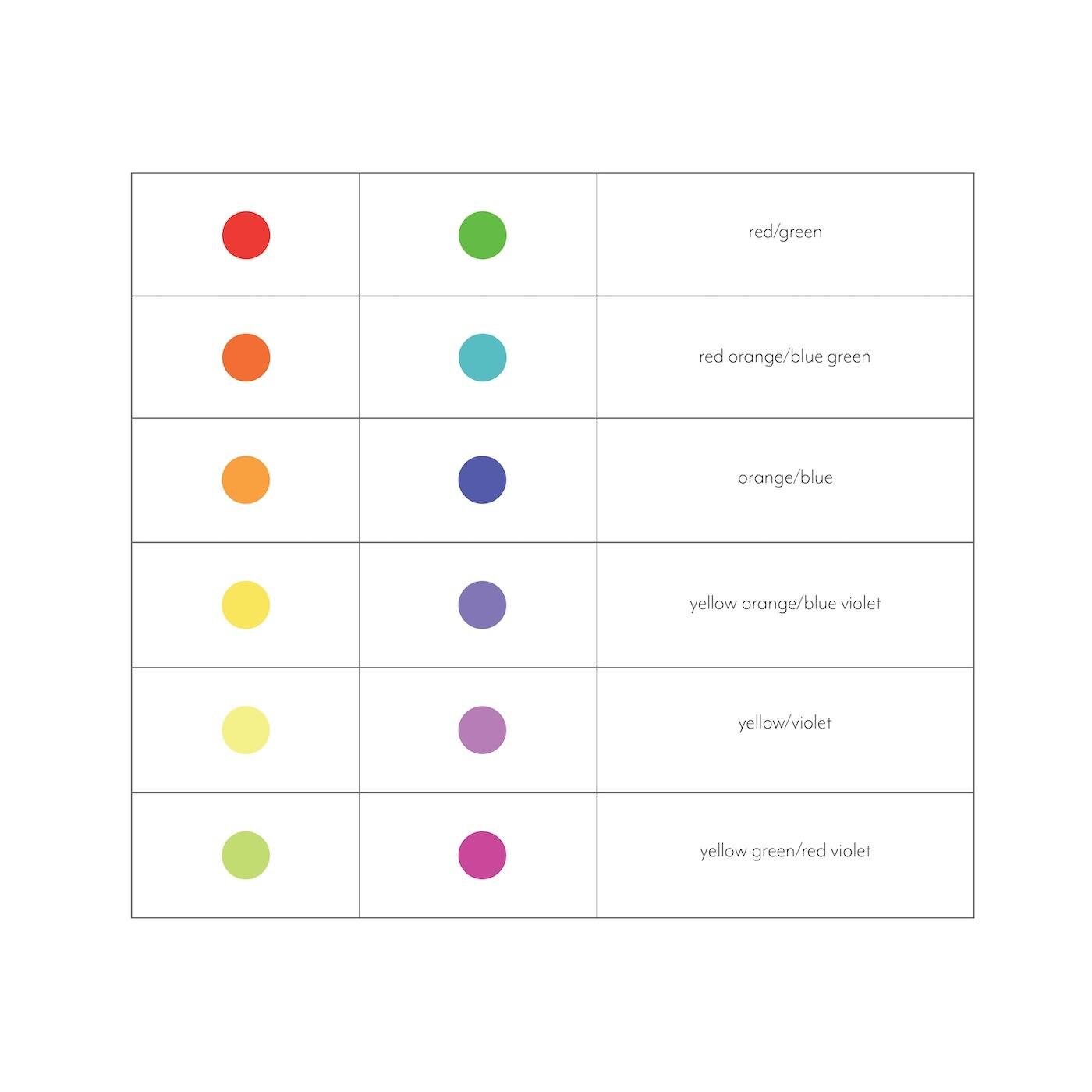
The main principle of color theory that you need to understand to use Demi is complimentary colors. Complimentary colors are opposites that enhance each other, and when mixed together cancel each other out to create a neutral shade. To find a color’s complimentary shade - just look directly across the color wheel!
red & green
blue & orange
yellow & violet
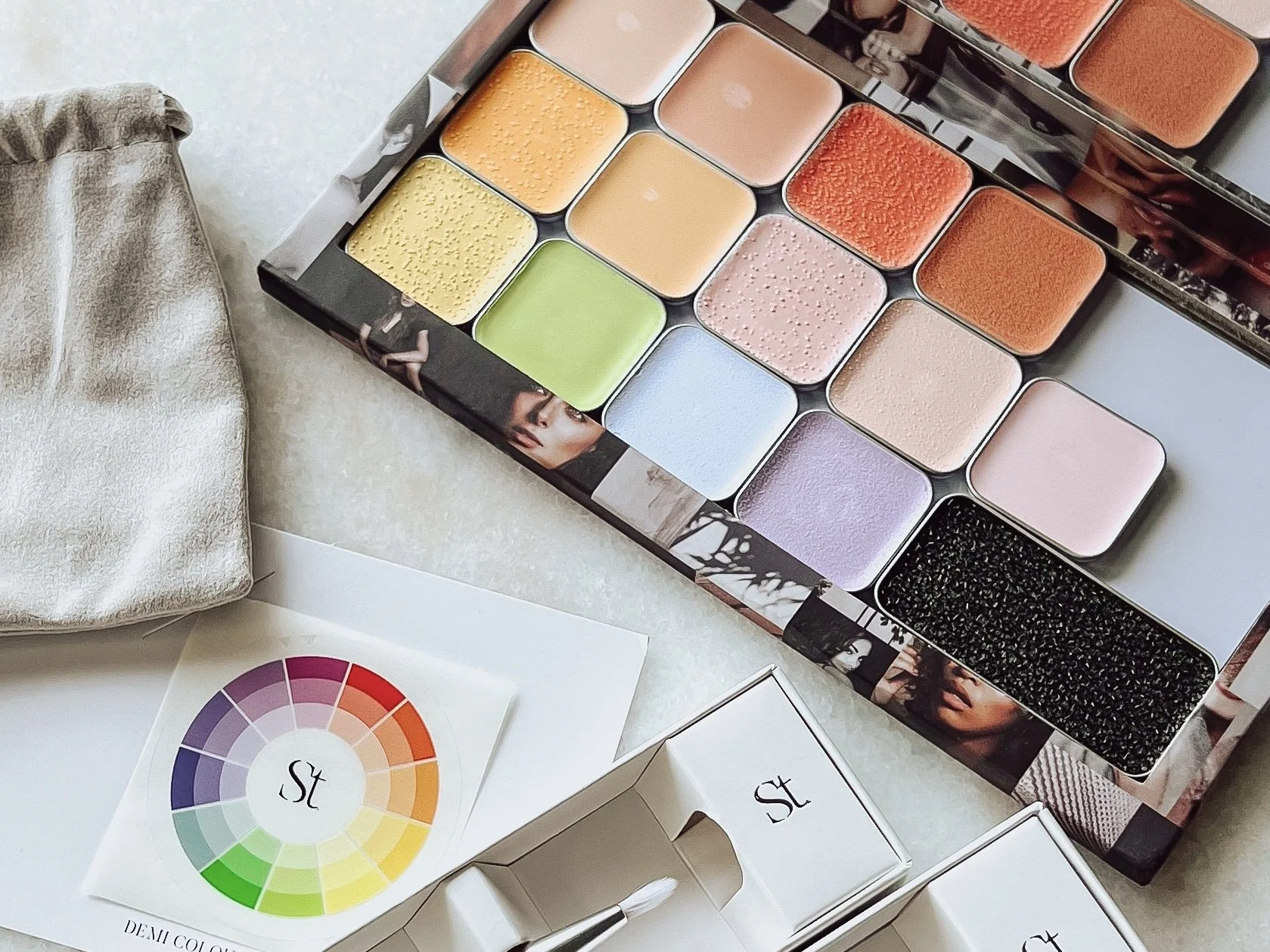
If you don’t have your complimentary colors memorized yet, don’t worry! All Corrector orders come with a color wheel sticker that you can stick to your compact mirror to use as a reference. Eventually it will all be second nature.
What do the Color Names Mean?
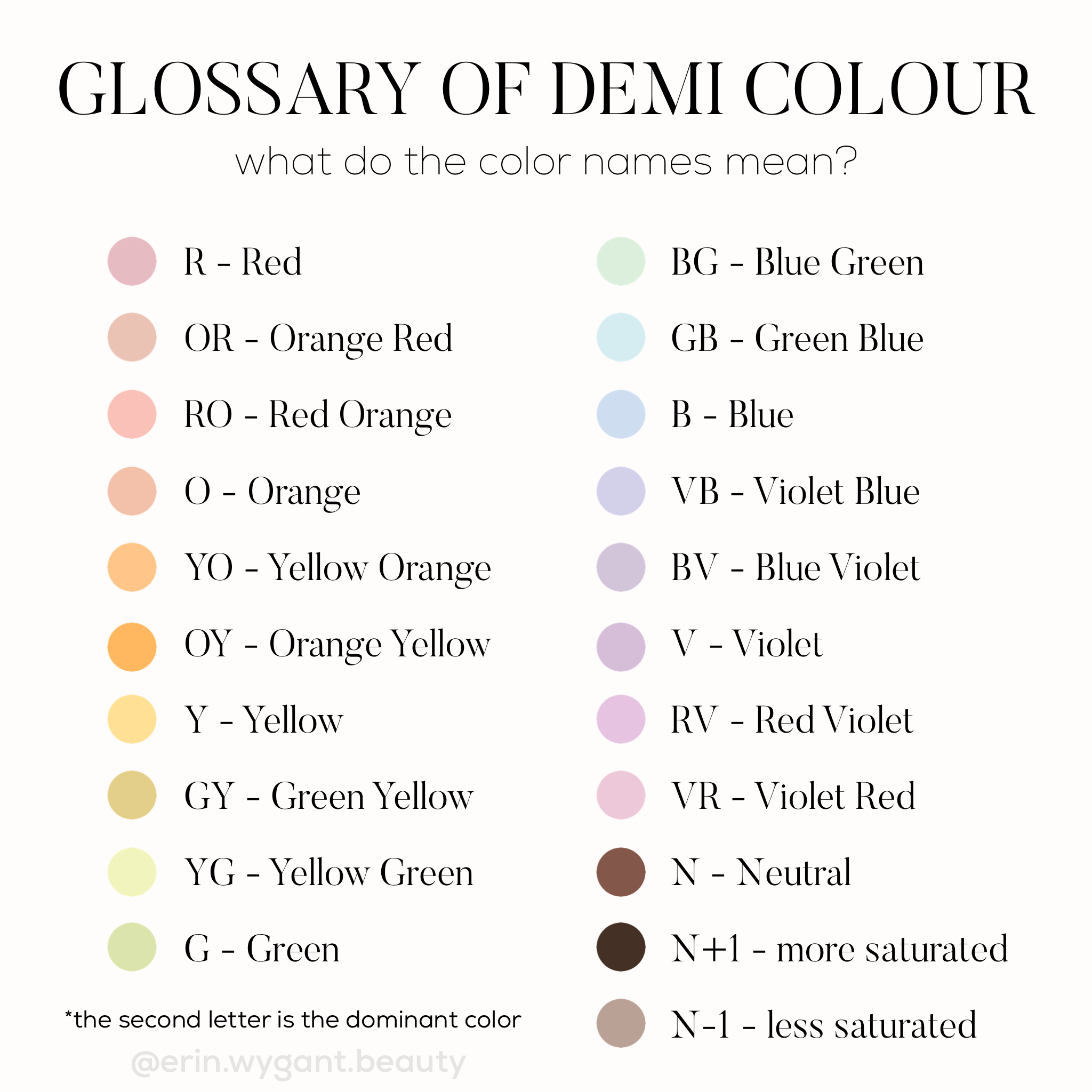
O1? NR? GY1?? Demi comes with its own language, which can be confusing at first. So let’s break it down!
It’s somewhat simple when you really figure it out. Each Demi Corrector shade that has a name that looks like a code:
The first letter indicates the color! If there are two letters, the second letter is the dominant color. For example, RO1 is more orange than red.
The number that follows indicates the saturation level, with 1 being the least and 7 being the most saturated.
Once again, although this may be confusing at first, you will eventually understand these names instinctually.
Frequently Asked Questions
-
No! Demi Colour is different than any other kind of color correcting makeup that’s existed before. Traditional color correcting concealers are more pastel and opaque and usually require foundation and/or concealer to be applied on top to hide the color - resulting in layers of makeup, which can create a more textured and cakey finish on the skin.
Correctors doesn’t have “coverage”. When applied correctly, it will act as a sheer filter on the skin to change what we can see. Demi doesn’t require foundation or concealer to be applied on top, and doesn’t need to be set with powder - resulting in an invisible finish, preserving the natural radiance of the skin.
-
It might seem complicated at first because we’re all so used to “traditional” forms of makeup. Once you’re able to set aside what you’ve always known and grasp this new concept, it actually makes so much sense. Instead of covering your entire face with makeup to hide a few “imperfections”, with Demi you’re filtering out the few distractions so your natural beauty can shine through on its own. There is a learning curve at first, especially for those of us who are “makeup people”, because we tend to have the most to “unlearn”. But putting in the effort is so worth the results! Once you learn how to do Demi, it becomes so much easier like second nature.
-
They aren’t meant to be used together, and Demi can stand on its own. However - if you’re interested in the added color correction underneath your regular makeup, that can be done! My advice is to make sure you’re applying Demi first onto bare skin so it “sticks” properly. Gently add other makeup and/or powders on top so you don’t disturb the Demi underneath.
-
Nope! You’re using such a miniscule amount of makeup with Demi that once it’s applied it stays put and never creases. If you have a primer you like that’s also part of your skincare routine, you could continue using it! But primers and setting sprays are unnecessary with Demi Colour. The finish of Demi is the same as your natural skin texture.
-
Each tin should last for a year! And that expiration date is mostly based on sanitary standards. You use such a miniscule amount of makeup per application, so they last a long time. You may go through some colors faster than others, but shouldn’t need to replace them often.
-
I still love them both! I still use both depending on my needs or the look I’m going for on a given day. They’re so different and each have their own strengths. IIID Foundation is the most stunning “traditional” makeup I’ve ever used - it’s very skin-like but does still leave a subtle makeup texture on the skin (it’s still makeup after all!) - but it’s so beautiful and fast and easy. Demi leaves a flawless undetectable finish and enhances your natural beauty like nothing else, but it can take longer to apply and can require more effort and determination to learn how to use it properly. I personally love using both in a patchwork effect on my face where I’m not necessarily layering them, but using each makeup product where I want it to create a full face of makeup. (For example, I always use Demi for my undereye area, because nothing beats it!) Seint is the best makeup I’ve ever used, and you truly can’t go wrong with any Seint makeup. If you need help choosing the makeup that’s best for you, please feel free to reach out and I’ll help you!
-
It’s not necessary! The Demi Method is a one-size-fits-ALL makeup system. These colors work on all skin tones year-round to neutralize all skin concerns. If you need help choosing Demi Colours to address specific skin concerns, you can always fill out my Demi Colour Consultation Form, and I will help you create a Demi palette to suit your needs!
Demi Method Steps
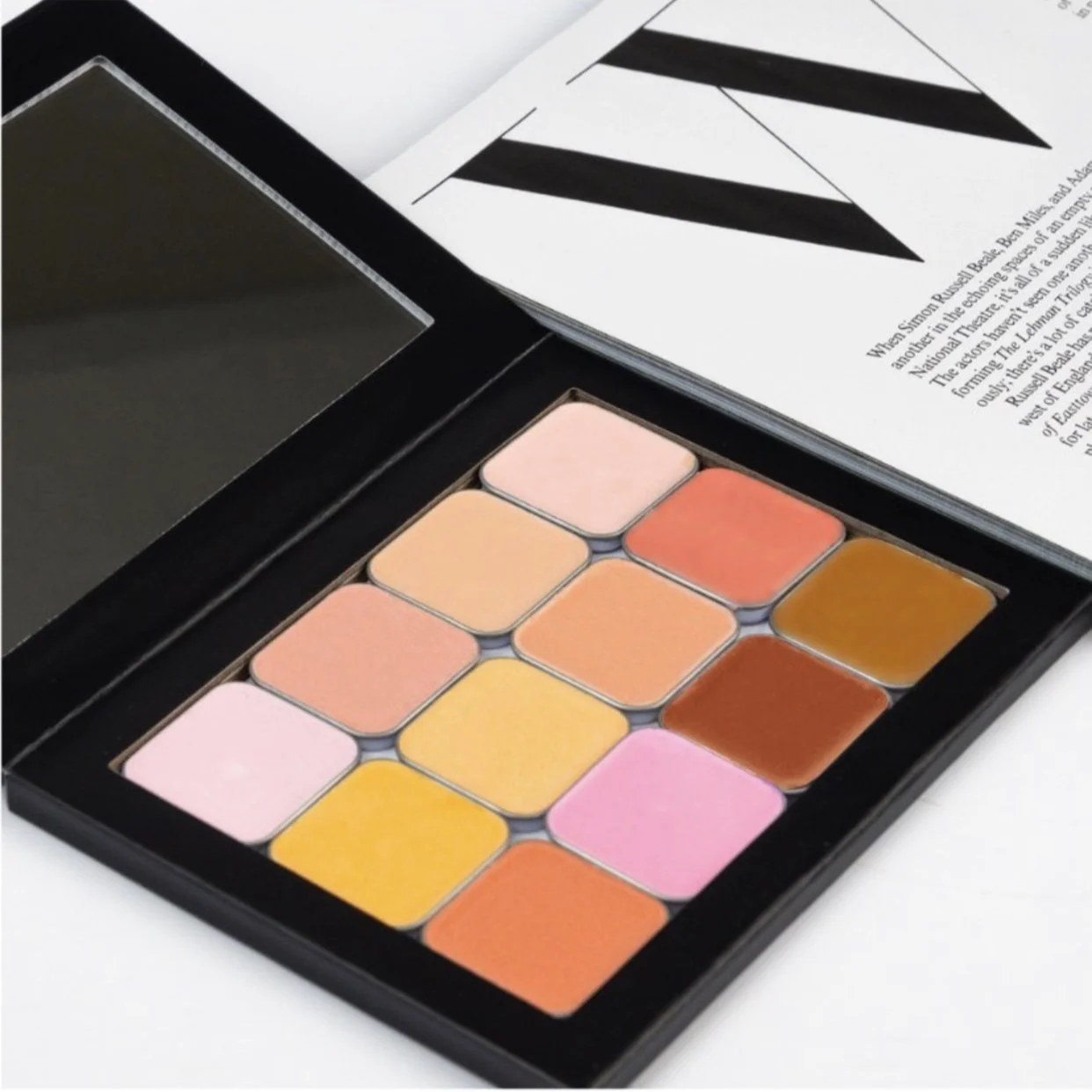
Adding Color & Toning
Using warm tones to bronze, add warmth, add color to pale areas, and toning general discoloration.

2. Sculpting
This is the Demi version of “contouring”. Just as with everything else, color theory applies with sculpting as well. Look at the skin in the areas you want to sculpt, and choose a complimentary neutral sculpt shade to apply a wash of color to tone and define your features. (Most people typically want to sculpt around the perimeters of the face, hairline, under cheekbones, sides of the nose, and underneath the bottom lip.)

3. Blush & Lip Color
Use a cream or liquid blush to add color to enhance the cheeks and lips.

4. Filtering
To filter distractions, use the color wheel to choose a complimentary color to the excess color in the skin you’re trying to filter.
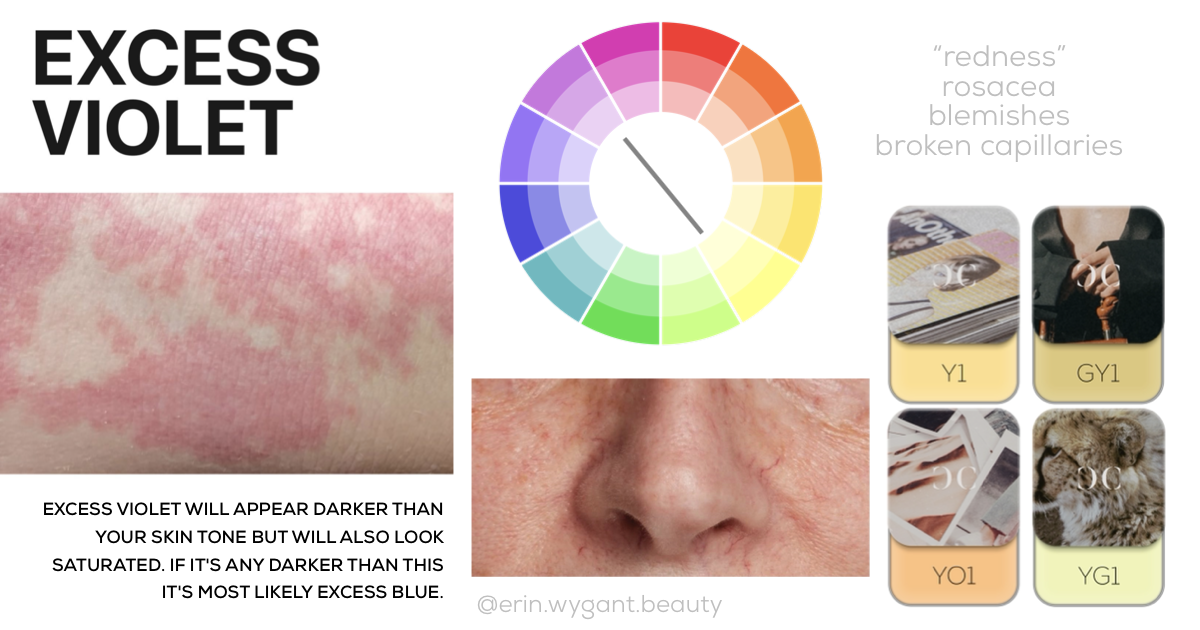
Ex. If you see excess violet, use Y1 to filter.

5. Gloss & Balm
This is the Demi version of Illuminator! Apply a liquid or cream illuminator (or any kind of moisturizing balm) with your fingertip to the top of your cheekbones, the cupid’s bow of your upper lip, your brow bone, and anywhere else you want to add a boost of natural luminosity to your skin. These can also be used on the lips to add a moisturizing shine.
Identifying Excess Color
The first step in learning how to use Demi Colour is learning how to identify excess colors in the skin. Our skin is a beautiful mosaic of colors with layers of skin, water, and oil that reflect light and create a natural iridescence that can’t be replicated. Demi Colour aims to filter areas of EXCESS color to bring the complexion back into balance so the natural beauty of the skin can shine through without things like blemishes, dark undereye circles, melasma, etc. distracting the eye.
Look at your face! Try to see the subtle differences in color of the different areas of your face. This can take practice. Once you learn how to spot excess color, it will become second nature.
COMMON COLOR CONFUSIONS:
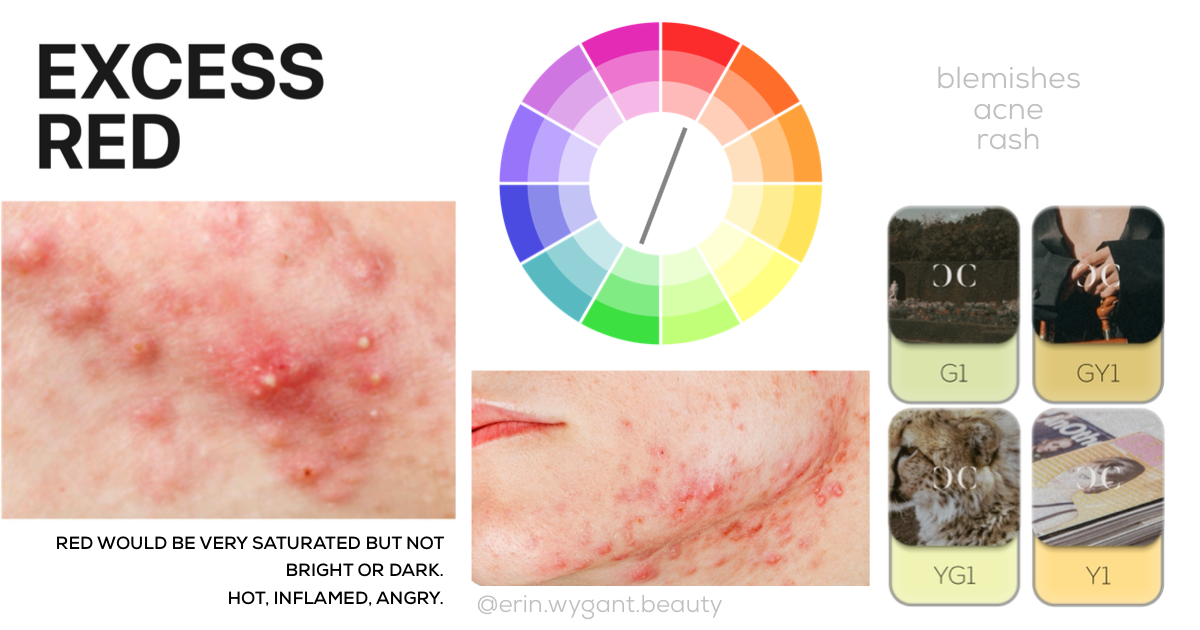
Most people think they have a lot of “redness” on their face. When in reality, it's most likely not a “true red”, it's more likely to be excess violet. True red is usually the color of a vibrant/inflamed blemish, for example.
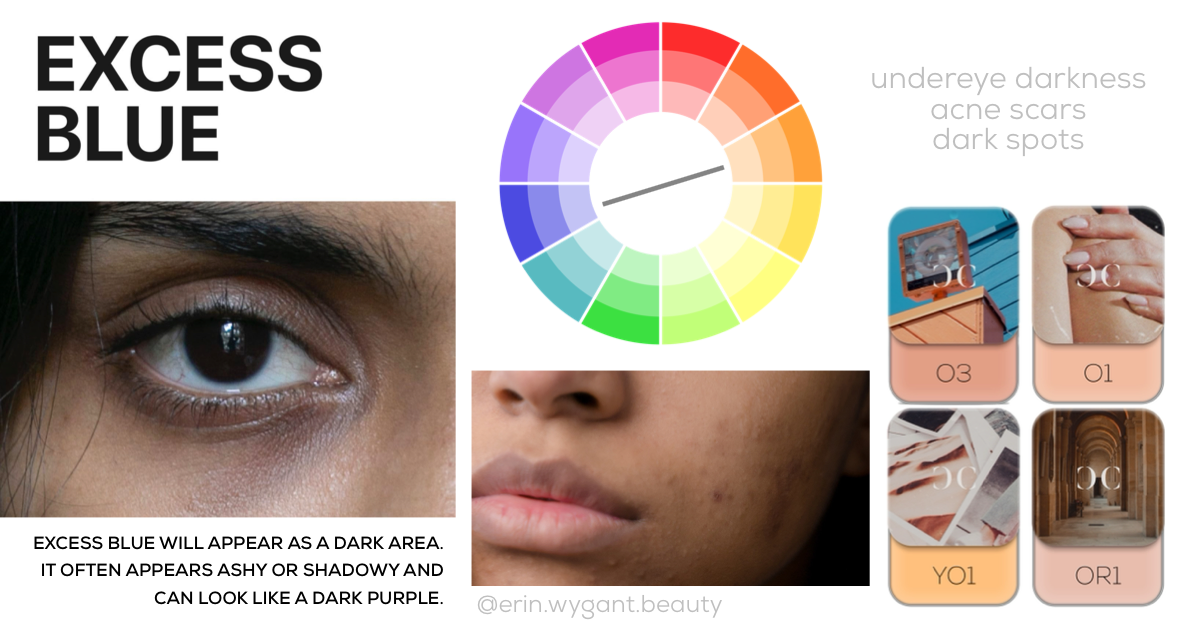
Most people also tend to believe their undereye area has a lot of “purple”, when it's more likely that the darkness they're seeing under their eyes is actually excess blue.
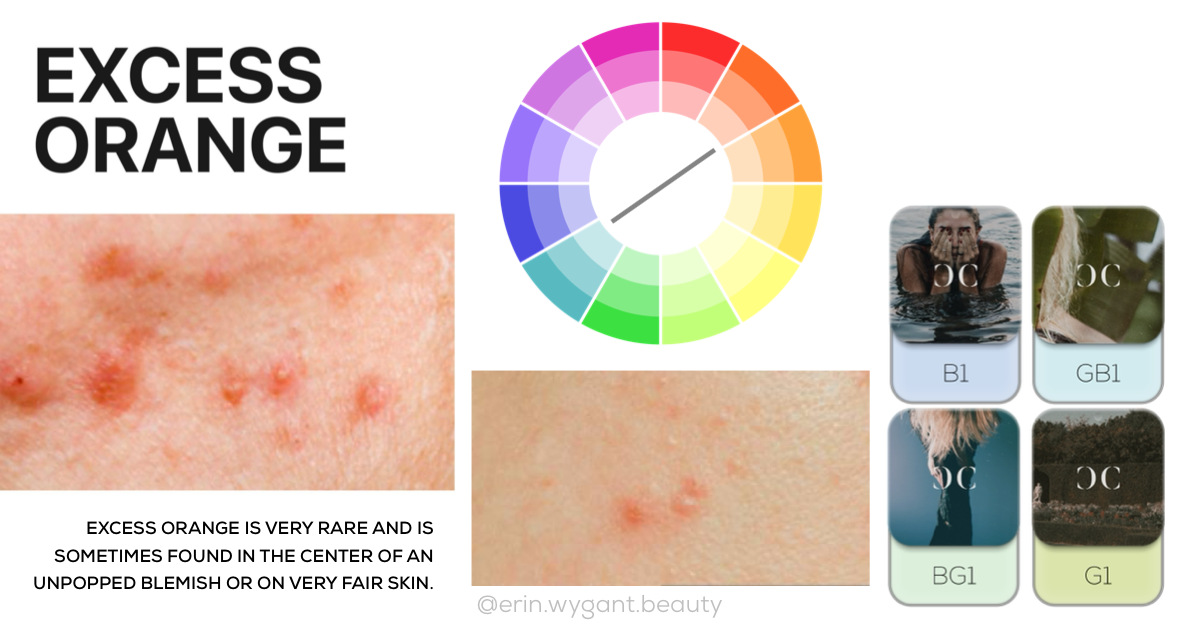
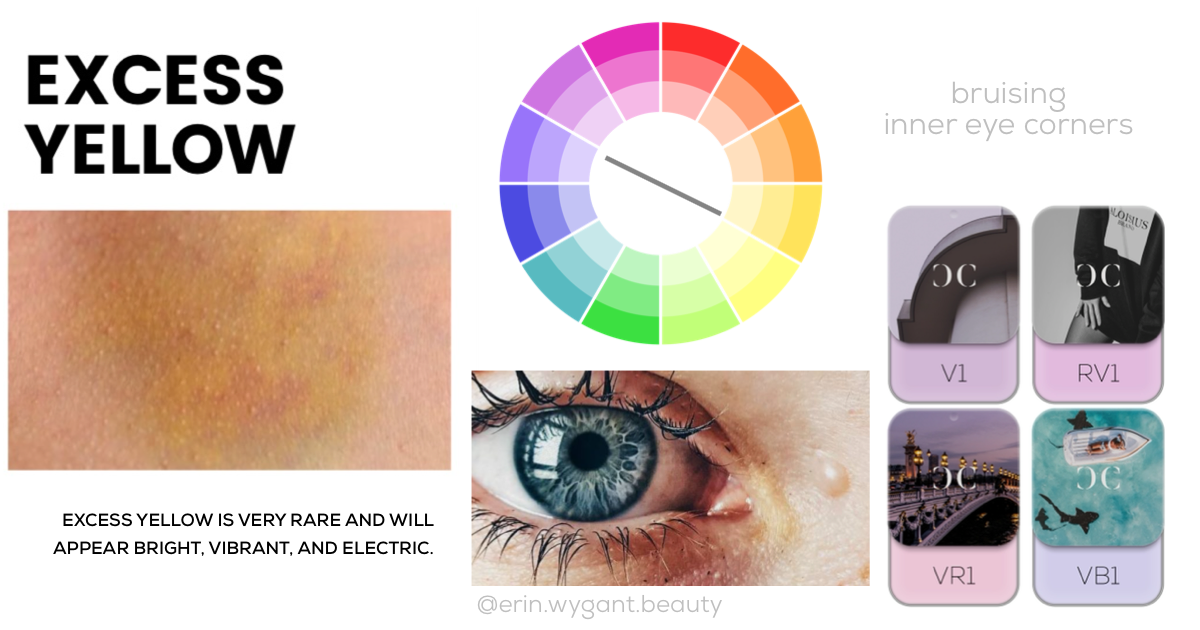
Orange and Yellow are more rare colors to see in the skin. If these colors are present they would be a bright vibrant orange or yellow (more likely on fair skin). If you see orange it's very likely that you're seeing a yellow-green.
Colors can sometimes be misleading! Try troubleshooting with different Demi colors if you're not sure (see “Troubleshooting”).
Seeing excess color in the skin is a learned skill, and sometimes it can take a little trial and error. But once you SEE the colors, you’ll never be able to UNsee them! Once it “clicks”, you’ll be able to apply your Demi without thinking too much about it.
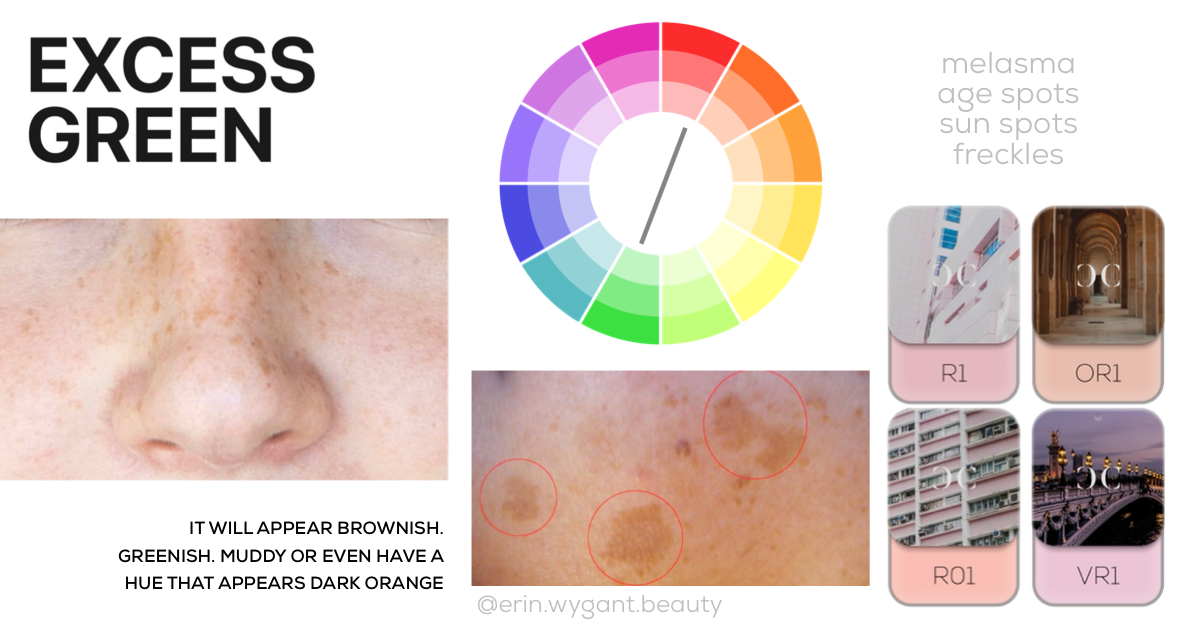
These images are super helpful in understanding what certain colors look like in the skin, and which complimentary colors of Demi should be used to filter them:
Technique
Learning how to use the proper technique when applying Demi Colour is important!
Using a brush that’s no bigger than the size of the point you’re filtering, lightly apply the complimentary shade of Demi directly to the excess color. Apply the least amount of color possible! Your brush barely needs to touch the surface of the color. Remember, you’re not trying to “cover” anything. It shouldn't look like you're applying a lot of color to the skin, rather that you're “erasing” or wiping away the distraction with the brush.
I like to apply color with the smallest end of the brush, and use the larger fluffier end of the brush to lightly blend the edges with feather-like light strokes. But you really shouldn't need to be blending very much!
IMPORTANT: Apply directly to the point of the area you're correcting. Going “outside the lines” will create a halo effect, and will create a new color problem to solve.
Brushes
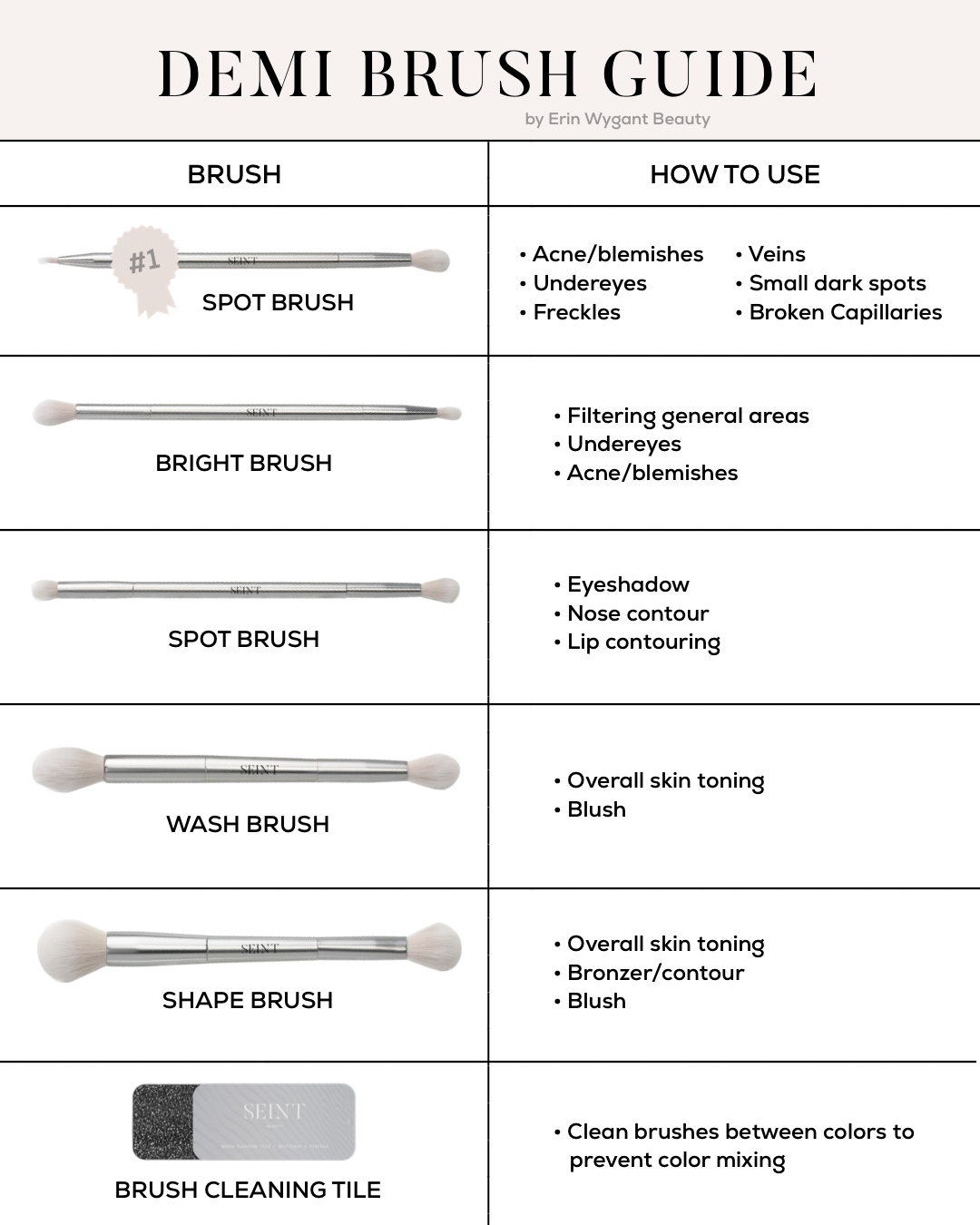
It’s important to use a small brush when filtering small points of excess color in the skin. My favorite and most used essential brush is the Spot Brush. You can use any small makeup brush, but I highly recommend the Spot Brush.
My second most recommended brush is the Bright Brush, and if you’d like to try Sculpting or adding Blush, the Shape Brush is excellent. (Side note: the Shape Brush is also amazing for applying a light layer of IIID Foundation Highlight as well!)
It may be helpful to have a Brush Cleansing Tile in your palette to clean excess makeup off your brush while switching in between colors so you don’t accidentally mix them in your tins. Or, you could just be lazy and unsanitary like me and wipe your brush off on the back of your hand, lol.
How to Get Started
Look at your face! Try to see the subtle differences in color of the different areas of your face. This can take practice.
Begin by ADDING color first. Use cream bronzer or contour to add warmth and define your features. Add color to any pale areas of the face. Tone discoloration. Add blush. Once you have the “end product” of your makeup look, you can begin filtering away any remaining distractions!
STEP ONE: JUST PICK THREE
You may have the urge to color correct EVERYTHING, but try to hold yourself back. Most of us are conditioned to think the only way to look presentable is to cover everything. But you'd be surprised how eliminating a few distractions can make all the other little “flaws” disappear to the eye.
For now, while you're getting the hang of things, just pick 3 things on your face to address. Which THREE things jump out at you the most right away. A blemish? Dark undereyes? Melasma? If you have one thing in particular that bothers you that you would like to diminish, start there.
STEP TWO: FIND THE DARKEST POINTS
“If it's larger than a sesame seed, it's not just one color.”
Once you've determined the area of concern, you need to zoom in closer and find the darkest points in that area. We always want to filter out the darkest points first because multiple dark points can create the illusion of a discolored area. Our goal is to get the most impact with the least amount of makeup possible.
It can be important to know when to stop! We don't want your face to be completely neutralized and colorless. That would be too time consuming and would kill the magic of Demi! Which is really just the magic of your skin. We want the complexion to be balanced and distractions minimized so your true natural beauty can shine through.
STEP THREE: FILTER
Using a brush that’s no bigger than the size of the point you’re filtering, lightly apply the complimentary shade of Demi directly to the excess color. Apply the least amount of color possible! Your brush barely needs to touch the surface of the color. Remember, you’re not trying to “cover” anything. It shouldn't look like you're applying a lot of color to the skin, rather that you're “erasing” or wiping away the distraction with the brush.
I like to apply color with the smallest end of the brush, and use the larger fluffier end of the brush to lightly blend the edges with feather-like light strokes. But you really shouldn't need to be blending very much!
IMPORTANT: Apply directly to the point of the area you're correcting. Going “outside the lines” will create a halo effect, and will create a new color problem to solve.
Troubleshooting
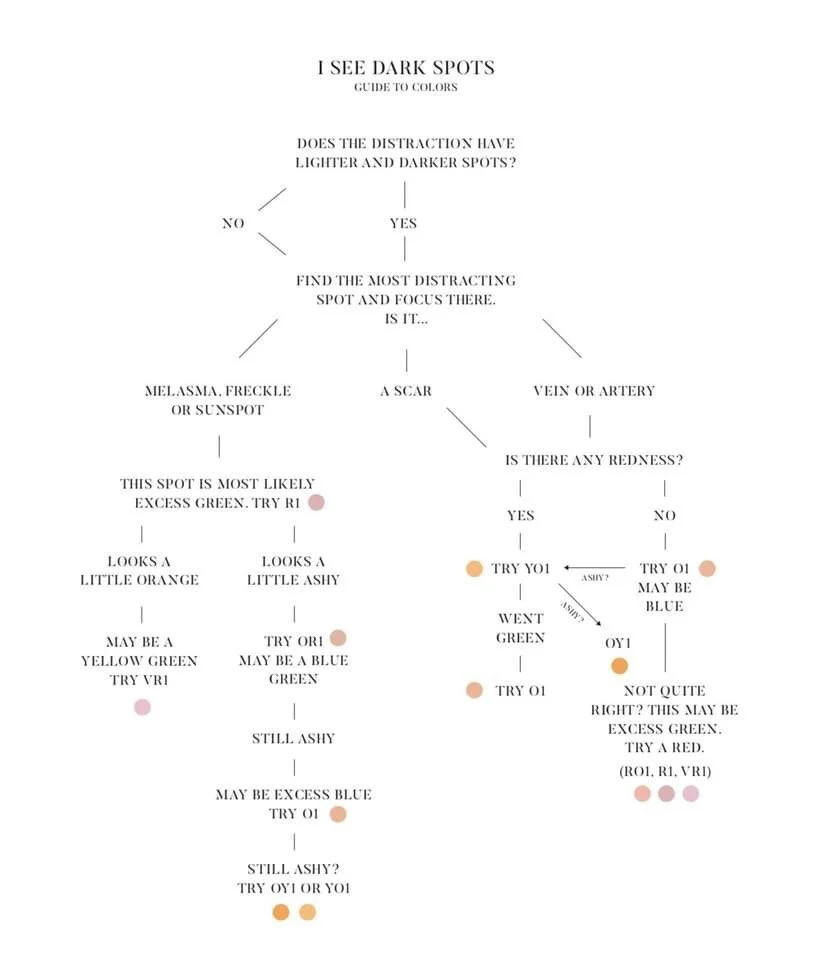
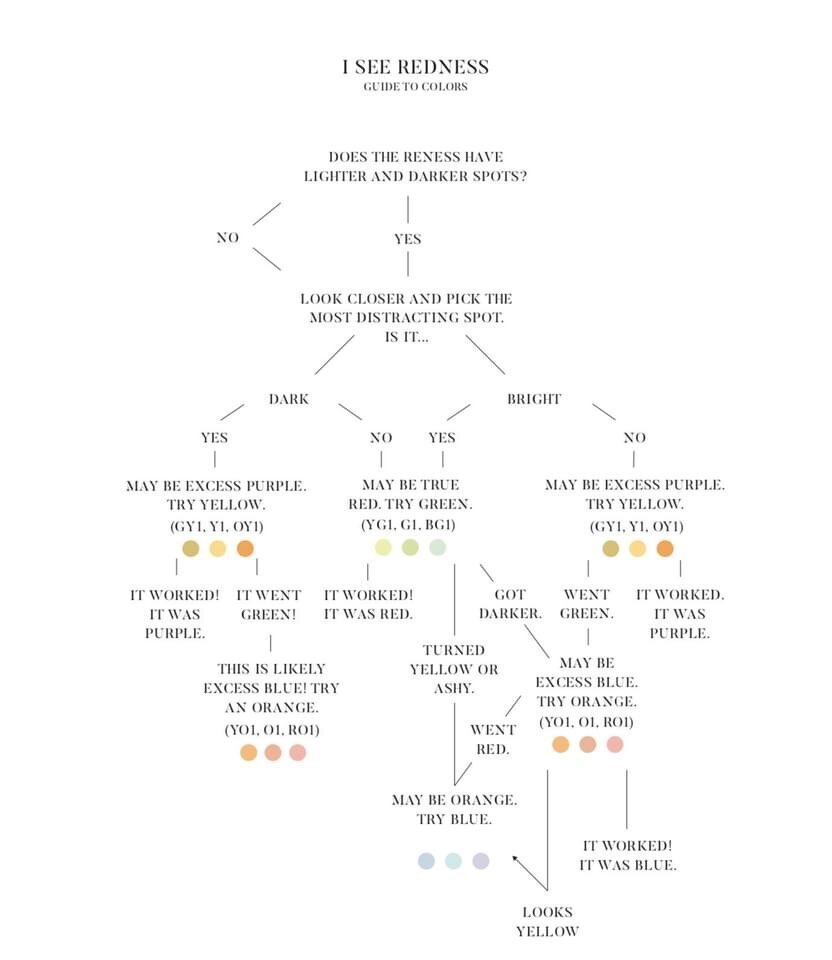
The excess colors in our skin can sometimes be misleading! Sometimes a little trial & error can be necessary and helpful in the learning process. If you try a color and it’s not filtering the way it should, or it leaves behind a new color, or it looks “ashy” - that’s a sign that you need to try a different Demi shade. Wipe off the color, and try a different one.
Examples:
If an area looks dark, it’s probably excess blue and you should try filtering it with orange Demi. If the result is ashy, try adding more warmth with yellow (like YO1 or OY1).
If you think an area looks red so you use a green Demi shade and it leaves behind a gray shadow, that’s a sign that you’ve added too much blue. Which means the area was probably excess violet rather than red, and you should try yellow instead.
If you’re filtering the excess green in an age spot with red (pink) Demi, but you can still see a shadow left behind, that’s a sign that there is still excess blue within the spot and you’ll need to use more orange (like RO1 or OR1).

Common Complexion Concerns
For more detailed tips & tricks for using Demi Colour to filter these specific skin concerns, visit the blog posts below:


Follow me on the socials!